Course Staff



Description
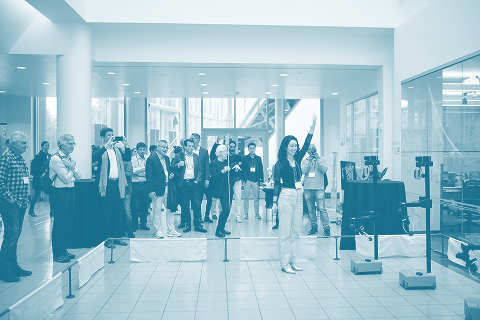
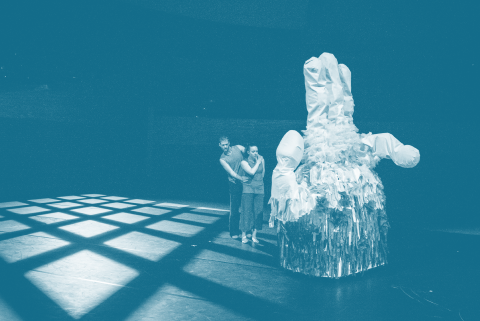
This interdisciplinary, project-based course at the Stanford Robotics Center (SRC) provides students with the unique opportunity to conceive, develop, and implement original creative robotics projects. This course is suitable to both undergraduate and graduate students from diverse backgrounds, including art, theater studies, music, engineering, computer science, and design.
This course emphasizes creative problem-solving, collaborative teamwork, and hands-on application of robotic technologies. Students will work in groups to explore various technologies and spaces within the SRC, culminating in a public exhibition of their final projects. The course bridges artistic expression with engineering.
Logistics
We will use Canvas for course announcements and assignments, and Slack for other communication. All course-related questions should be posted in the course Slack channel, which students can access through the Canvas course page. Office hours will commence after the first lecture, according to the following schedule:
- Catie Cuan: Fri 8-10am, Zoom (link here)
- Michelle Pan: Mon & Wed 1-3pm, SRC
- Aarya Sumuk: Mon 4:30-6:30pm & Tues 3-5pm, SRC
- Vakula Venkatesh: Mon & Wed 3:30-5:30pm, SRC
Schedule
Readings not linked are posted under Files in Canvas.
| Week | Date | Lecture | Assignments |
|---|---|---|---|
| 1 | Jan 7 |
Introduction to robotics and arts Course overview Background on tools Readings: Against Interpretation, Critical Making, 10 Rules for Students & Teachers |
Assignment 0 out |
| 2 | Jan 14 |
Guest lecture from Ken Goldberg Tools workshop Assignment 1 description Readings: Cultivating the Uncanny: The Telegarden & Other Oddities, Neuroaesthetics, Your Brain on Art |
Assignment 0 due |
| 3 | Jan 21 |
Assignment 1 presentations Assignment 2 description Readings: Alexander McQueen Spring/Summer 1999, Regular Animals, Improvisational Technologies, Black Flags, Manus, Assembly Lines, Being, Lamentation: Dancing the Archive, CURTAIN and Time to Compile, Breathless: An 8-Hour Performance Contrasting Human and Robot Expressiveness, The Verbasizer, Suite by Chance, Working Process, Commit |
Assignment 1 due |
| 4 | Jan 28 |
Guest lecture from Amy LaViers Assignment 2 presentations Readings: Expressing thought: improving robot readability with animation principles, The Body in Affective Robotics, Toward Robotic Musicianship, |
Assignment 2 due |
| 5 | Feb 4 |
Guest lecture from Michele Elam Project proposal presentations Assisted work Readings: Nick Cave on Why AI Will Never Write a Great Song, Poetry Will Not Optimize, or What Is Literature to AI?, There Is No A.I., Why AI Isn't Going to Make Art, An Honest Conversation on AI and Humanity at WEF 2026 |
Project proposal due Midpoint description out |
| 6 | Feb 11 |
Project discussion Assisted work Readings: How Creativity in Humor, Art, and Science Works: Arthur Koestler’s Theory of Bisociation, Performing Automation, A Phenomenology of Artistic Doing: Flow as Embodied Knowing in 2D and 3D Professional Artists, On Style |
|
| 7 | Feb 18 | Midpoint review for visiting committee | Midpoint presentations due |
| 8 | Feb 25 |
Guest lecture from Jaron Lanier Project support Readings: How Dolly Parton led me to an epiphany, Gut Wrench, Mindless Thought Experiments, Digital Maoism - The Hazards of the New Online Collectivism, The National Theater - “Process” |
|
| 9 | Mar 3 |
Guest lecture from Hans Peter Brondmo Project support Note: this class is rescheduled from Wednesday March 4 to Tuesday March 3 Readings: This is Water, The Chase, Fail Better, Read Better |
|
| 10 | Mar 11 | Final presentations and demos in Stanford Robotics Center | Final report guidelines out |
| Finals | Mar 18 | Final reports and videos due |
Prerequisites
There are no formal course prerequisites. However, students should possess a strong curiosity about robotics and AI and a willingness to learn new technical and creative skills. Basic familiarity with programming (e.g., Python, C++) or design tools (e.g., CAD software, visual art tools) is beneficial but not required. Students from all departments and levels of experience are welcome.
Course Format
This course will primarily be conducted through hands-on project work, guided by regular group meetings, individual consultations, and periodic workshops/lectures on relevant topics. The emphasis is on active learning and problem-solving through doing.
- Project-Based Learning: The core of the course involves group projects.
- Introduction to Artistic and Robotics Modalities:
- Review prior work in performance, installation, and visual art projects involving robotics
- Review relevant research literature in performances and visual art involving robotics
- Workshops & Lectures: Brief sessions will introduce key concepts, tools, and safety protocols for SRC facilities.
- Critiques & Feedback: Regular opportunities for peer and instructor feedback on project progress.
- Mentorship: Instructors and TAs will provide guidance and support throughout the project lifecycle.
Assessment
This course is graded on a Letter Grade or Pass/Fail basis. Assessment will be primarily based on the quality of the group project, the collaborative process, and effective communication of outcomes. Individual contributions to the group project will also be considered. The following components will contribute to the final assessment:
- Project proposal / initial guiding inquiry (10%)
- Mid-term project review (25%)
- Final project & exhibition (40%)
- Assignments and reflections (25%)
Late policy
- Assignments: Deduct 33% for every 24 hour period that it is late. Assignments not accepted after 3 days.
- Project proposal: Deduct 33% for every 24 hour period that it is late. Proposal not accepted after 3 days.
- Final report: Firm deadline, not accepted late.
Group Projects
Students will form groups of 3-4 to undertake a quarter-long project. Projects should include both an engineering and an artistic element—both broadly interpreted—as long as they leverage SRC technologies and spaces. Examples might include:
- Interactive robotic sculptures
- Robots used in performance or storytelling (ex. original theater or dance)
- Real time human-robot visual art making (ex. painting)
Groups will be encouraged to self-organize based on shared interests and complementary skills, but the instructors will assist with group formation as needed.
Course Materials & Resources
SRC Facilities: Students will have access to various SRC spaces and equipment (robots, motion capture systems, haptic feedback systems) as needed for their projects. Specific access protocols and training will be provided.
Software & Tools: Access to relevant software will be discussed and facilitated based on project needs.